A story of walking photographs
English version / [Ir a la versión en español]
A Latina technician, once a promising academic, and the sheltered daughter of a Silicon Valley magnate cross paths over a dormant scientific idea, one that could redefine perception or risk dangerous consequences for their own lives and futures.
The project
timeBlur, pronounced in Spanish as temblor, sounds almost the same in both languages, but the translation shifts its meaning: what is time going out of focus on one side becomes a vibration, a tremor, on the other. The screenplay works the same way. It is built on errata and mistranslations, not only between languages and cultures (even when they share a language), but also between disciplines, between human and nonhuman characters, and between technological platforms: photography, film, video, television, new simulation platforms, and DNA strands.
A character-driven drama with a sharp aesthetic and a sense of humor, it blends social realism with speculative science grounded in real research, exploring the emotional costs of social positioning and the intimate politics of knowledge production in a world increasingly defined by technological spectacle.
I began writing the screenplay in 2023. Full documentation, following film industry standards, is available upon request.
Synopsis
Camila, a Colombian scientist who traded a promising academic career at home for a Green Card in the United States (for dignity, she tells herself, and for her family’s future), works as a home automation technician servicing luxury estates across Silicon Valley. She lives with Mario, a gifted illustrator slowly gaining international recognition, and their daughter Cristal, a sharp-witted child who transforms scarcity into imaginative play. Over a decade of immigrant labor, Camila has buried her intellectual ambitions—but not extinguished them.
Her first years in the US unfold between a converted garage in Culver City, LA, and the hidden service corridors of Beverly Hills mansions.
One day, leaving a casting call for extras in a TV commercial, she finds a discarded digital camera. “A birthday model,” Mario jokes when she comes home grinning to show him her first photos. From then on, Camila compulsively documents the “continuity errors” of her daily life: the material grammar of spaces she passes through without ever belonging. To her own surprise, she has found a hobby.
In the early 2010s, a chance encounter with the new wave of virtual reality headsets at a makerspace in LA brings her back, one last time, to her research notes: she jots down something about the strange lag between a brain building a new sense of orientation for a simulated world and muscles, slow to answer the eye. But survival takes precedence: when Cristal is born, Camila stops applying to labs, universities, and casting calls, and accepts the technical role that will define the next decade of her life.
Years later, the family has settled in San Jose, a daytime version of Blade Runner’s city, cruised by lowriders that seem to fly higher, at least in self-esteem, than any car coming from Hollywood’s futuristic sets. As an inside joke, they say they live in LatAsia; a trip to San Francisco is a trip to WhitAsia, and now and then they explore the schools and food of AfrAsia, meaning Oakland and its surroundings. One day, driving home through Sunnyvale, Camila stumbles into a makerspace that looks much like the one where she first wore a VR headset. Inside, the air is tense. At a back-room talk on military applications of augmented reality, she challenges the speaker’s premise that higher screen resolution improves perception, and the room turns hostile. Afterward, a young woman approaches her, eager and cautious at once: she agreed with every word. Her name is Shailee. Before they can talk further, an older man pulls her away with unmistakable authority.
Shailee is the daughter of Dr. Devendra Iyer, a Silicon Valley biotech magnate whose empire turns living ecosystems into dashboards and patents. Barely out of a graduate program in nanotechnology and improbably young, she is brilliant and adrift, still living in her parents’ mansion and suspecting she was “grown in a lab” to become property of the family empire. When Camila is assigned to reprogram the Iyer estate, they meet again. Miranda, Shailee’s mother, reads their bond as an inappropriate relationship with the help and forbids it outright. So every night, Camila smuggles Shailee out through the very surveillance systems she installed.
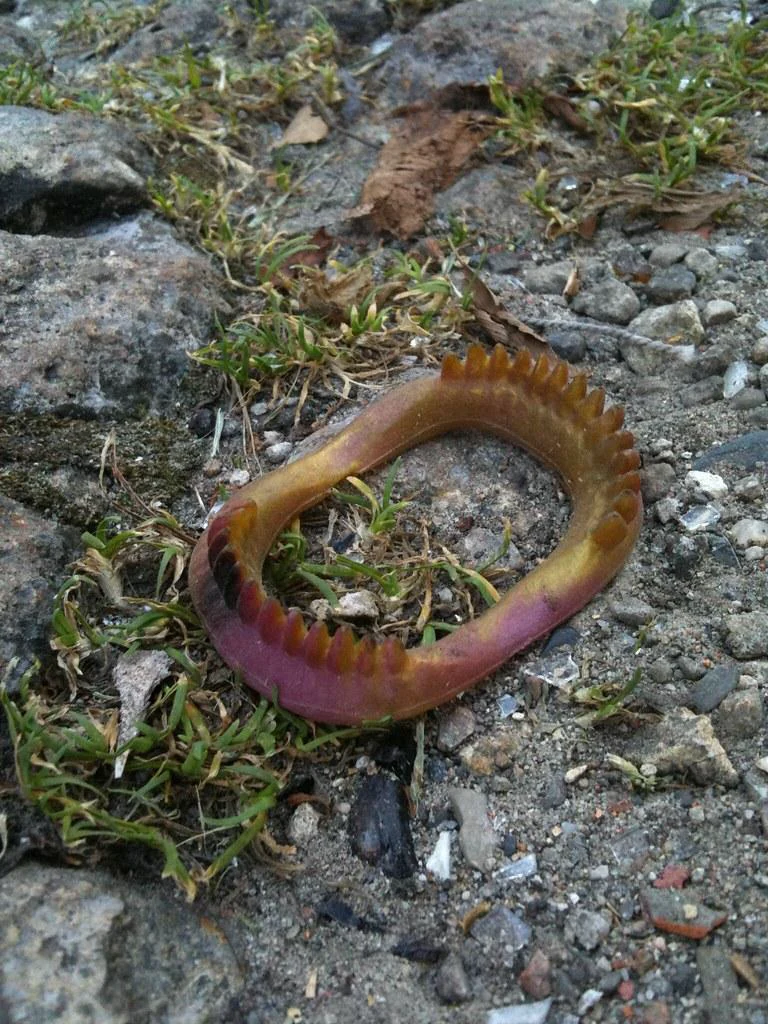
Working from a makeshift laboratory in the abandoned warehouse of a cookie factory, Camila and Shailee develop the lucidBots: a hybrid ecosystem of genetically modified microorganisms coupled with nanoscale components, designed to behave as a swarm, responding mimetically to their environment, with spatial precision high enough to render a two-dimensional image that produces the illusion of depth with maximum economy of means. Camila’s programming paradigm supplies the architecture: logic does not instantiate objects; bodies instantiate the emergence of an image. Shailee cultivates the hybrid organisms and prototypes their nanoscale components. Their work is inseparable from the long, aimless night walks through San Jose’s overlooked immigrant corridors.
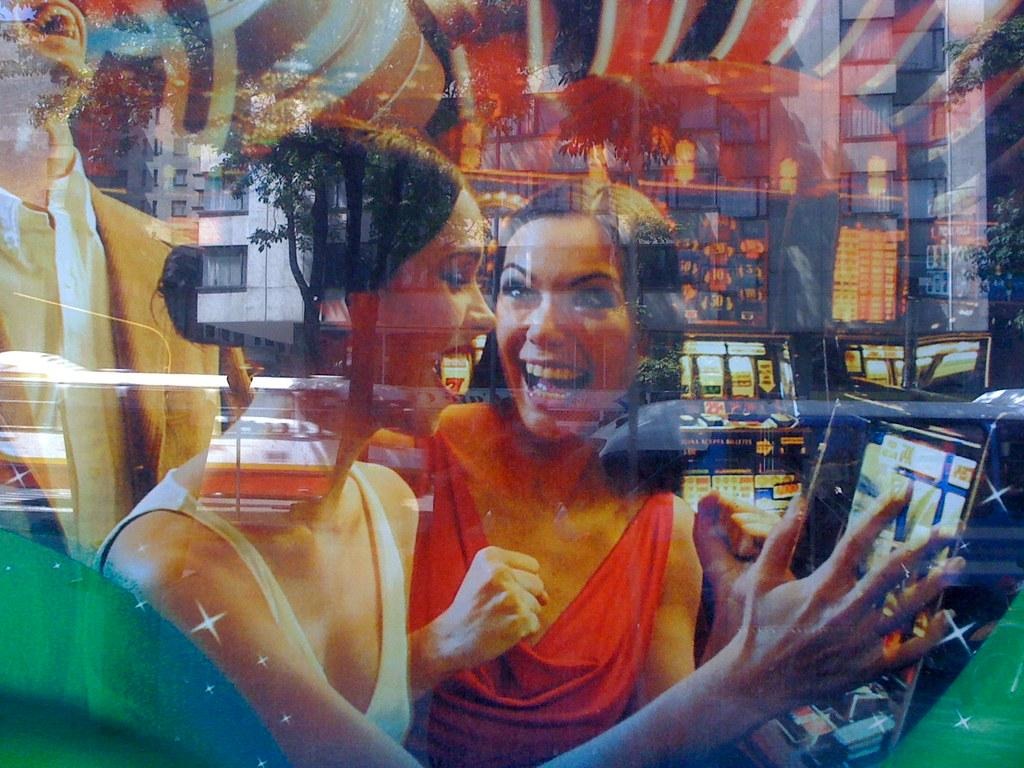
The warehouse is big enough for more than science. Mario and Cristal fill it with secondhand instruments, Cristal finally gets her drum kit, and the family band rehearses while the two scientists work. Shailee, raised in a family that is its opposite, becomes their most unlikely fan, until the morning she finds Camila playing bass with them and the resentment she has been swallowing breaks the team apart. It takes a night walk ruled by a single die, and a TV store window at dawn, to bring them back together with a new conviction: if they want the swarm to move as images, they must become images and movement themselves.
When the prototype succeeds, the lucidBots don’t merely assemble an image; they negotiate it. Concurrent biological layers running at different speeds (ions, glutamate, noradrenaline and, absurd as it sounds, hormones) settle among themselves what to show, including an image of the swarm itself. The paradigm finally has a name: maluca programming. The swarm stabilizes in depth and drifts with ambient signals: heat, humidity, breath, and residues exchanged with other microorganisms. But their triumph leaves evidence. Raj, Miranda’s son from a previous marriage, has been quietly watching Shailee; on the night of the family band’s first concert, with the lab unguarded, he steals every file he can and delivers the breakthrough to Dr. Iyer, who seizes the project by force. Cornered by the threat of an industrial espionage suit, Camila bargains only for Shailee’s reinstatement as principal investigator and agrees never to cross paths with the family again. Months later, promoted to a remote role at the service company, she is at peace with the loss: it was the collaboration itself, not ownership of its result, that she needed to feel whole again.
Reinstated as principal investigator, Shailee volunteers as the first test subject. A containment failure lets the lucidBots escape the liquid crystal and enter her bloodstream through the membranes of her eyes. Her collapse is imminent. The fourth act brings both families together to save her life, forcing them, once again, to leave behind the places they believed were known and safe. The ending is deliberately withheld here and included in the full documentation, available upon request.
Filmmaker’s statement
After migrating to the United States, I spent twelve years servicing luxury homes in Los Angeles, Dallas, Atlanta, Miami, and Silicon Valley. My wife, Adriana Lozano, is a visual artist whose drawings and papier-mâché works are held in public and private collections at renowned institutions.
timeBlur is fiction, but its architecture comes from our own experience. Camila is not me, and Mario is not Adriana. While their circumstances rhyme with ours, they are refracted through a double shift, in the characters’ gender and in the narratives’ genre (a single word in Spanish: género), compressed into a dramatic structure, and pushed toward speculative consequences we have not lived.
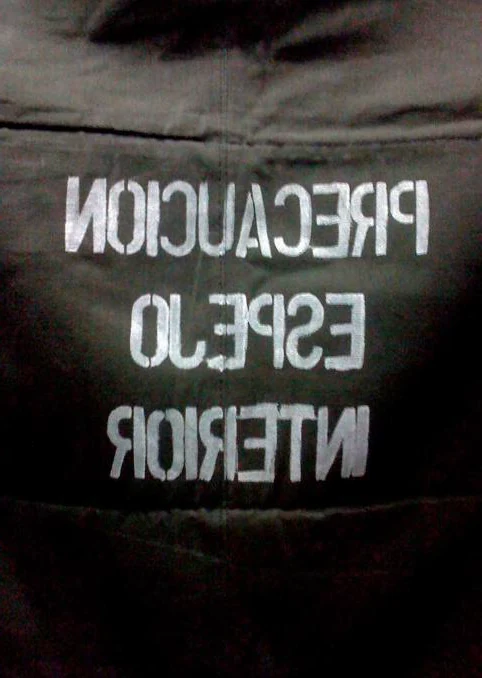
The estates she services are like the ones I serviced, and the same goes for every other space that refuses any sense of belonging: garages converted into rooms for several people, service elevators with padded walls, Craigslist job listings, and the particular humiliation of being told your body must be present for authority to feel real. None of these are details from production research. They are the texture of a daily life that most films about California never show, because their characters tend to enter through the front door.